
The Role of Prescribed Fire in Prairie Ecosystems
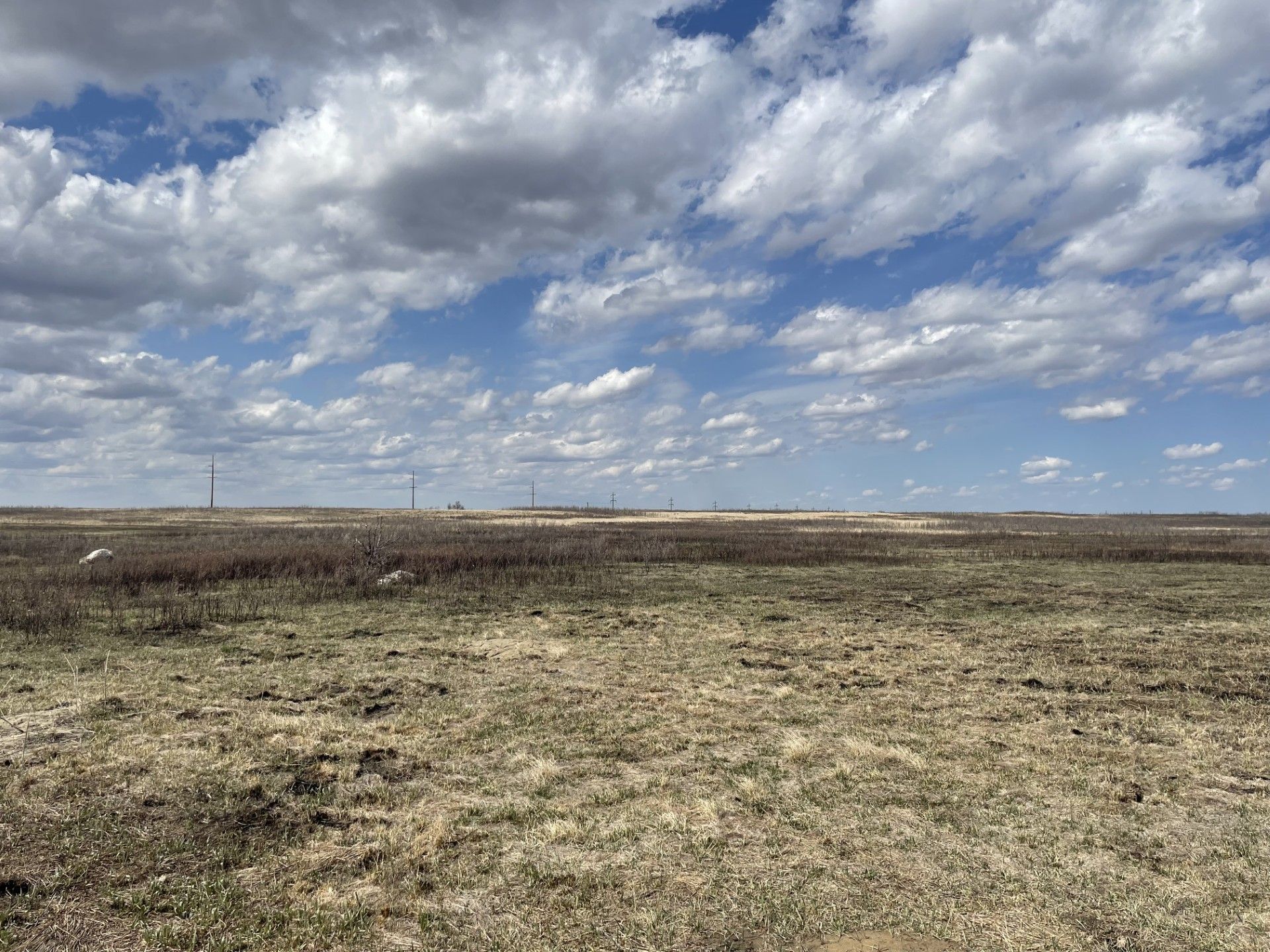
Native prairie the spring following a prescribed burn the previous year – note the charred patches across the landscape.
Indigenous peoples of the plains have used controlled burns for centuries to manage bison forage and habitat, control woody encroachment, and maintain plant communities and biodiversity. The historic use of fire by First Nations was carefully timed and guided by deep-rooted knowledge from observation of seasonal cycles, weather patterns, and ecosystem responses to disturbance. Fire was not seen as destructive, but as a natural and renewing force. The arrival of European settlers in the prairies brought new land management policies that largely focused on fire suppression rather than traditional practices, which led to disruptions in nutrient cycles and biodiversity, invasive and woody plant encroachment in the grasslands, and more aggressive annual wildfires due to the accumulation of a massive fuel load in the form of dead organic matter.
Although Indigenous people of the plains have long understood the beneficial relationship between fire and soil and plant health, contemporary scientific research has begun to reveal exactly what processes take place during and after a fire that result in a healthier landscape. Some of the most significant benefits of prescribed fire take place at the microbial level, unseen and below the soil surface. When a fire is lit under controlled conditions, the first material to burn is accumulated plant litter. The removal of this layer of plant litter allows sunlight and warmth to reach the soil and stimulate microbial activity, especially in the spring following snow melt. Active soil microbiomes are essential for decomposition and nutrient cycling. Before decomposition, the nutrients in dead organic matter are locked up and unavailable to be used as food for growing plants. Fires can help speed up the release of essential elements like nitrogen, phosphorus, and potassium via combustion and ash deposition, providing nutrients in plant-available forms that can be used as fertilizer for new plant growth. Although there is generally some nitrogen lost during the burning process, this is often balanced over time as plant communities with nitrogen-fixing species recover and grow.
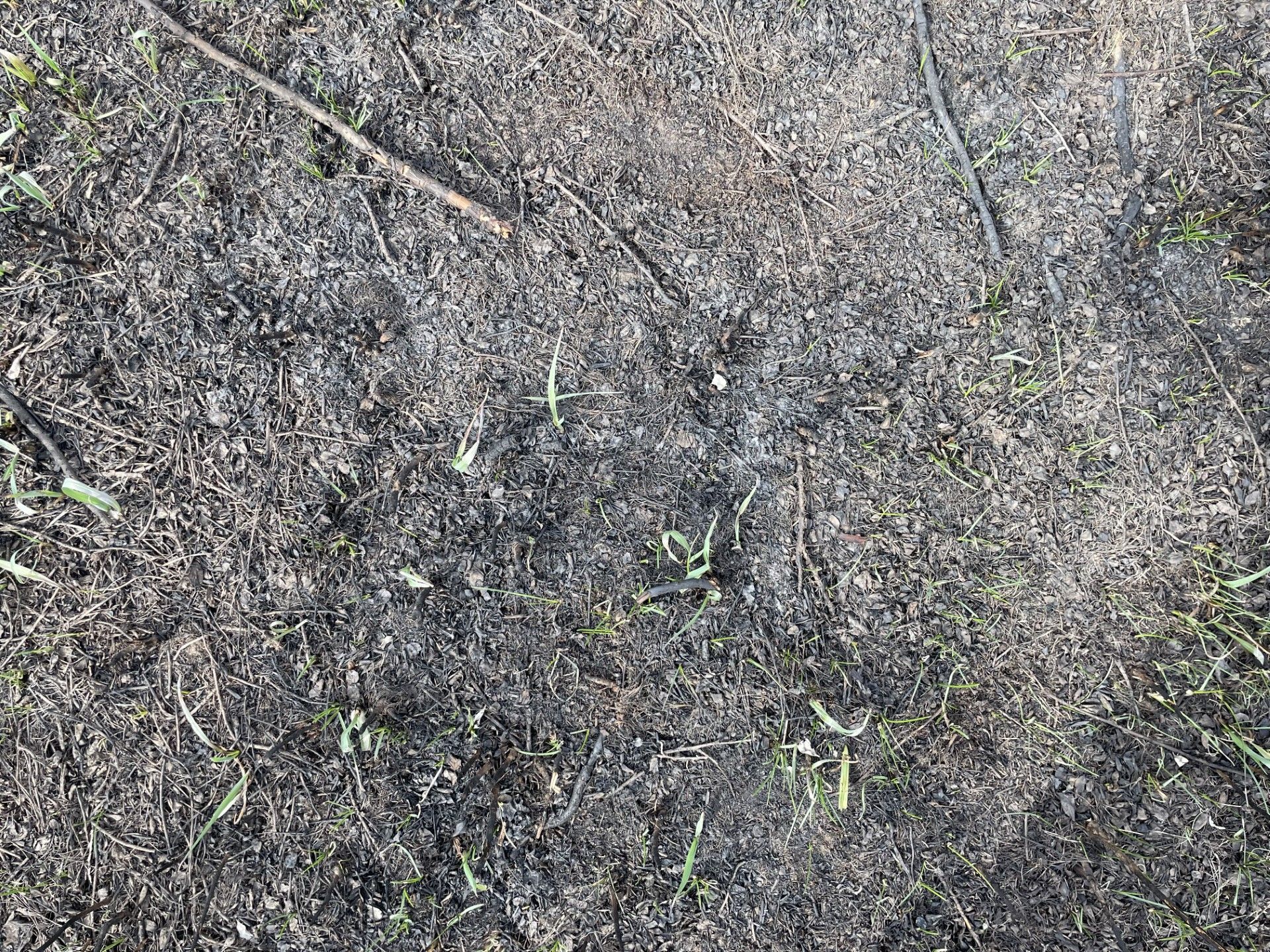
Charred remnants of a prescribed fire.
On a more macro scale, prescribed fire also improves soil structure over time. Native plants, particularly grasses, have evolved to have deep, vigorous below-ground root growth habits to overcome the regular loss of above-ground biomass during burns and other surface disturbances. Complex plant root communities are largely responsible for the success of agriculture in the prairies, as increased soil organic matter is a defining element of the rich, dark topsoil found throughout the region. Wide-reaching, fibrous root systems enhance soil aggregation, water infiltration and retention capacity, and resistance to erosion. The cumulative effect of these characteristics is a landscape with some inherent resilience to the highly variable climate of the prairies.
Not only are prairie plants well-adapted to fire, many native species depend on it. Thick layers of dead plant material on the soil surface can inhibit new growth; burning that litter allows sunlight and warmth to reach emerging shoots, resulting in many grasses and forbs that respond to fire with increased vigor and productivity. Prescribed fire can also shape plant community composition, favouring native, fire-adapted species with deep belowground growth and suppressing invasive plants and woody encroachment. Without periodic fire, grasslands have begun to be gradually taken over by shrubs and trees, reducing habitat for native wildlife and pollinator species.
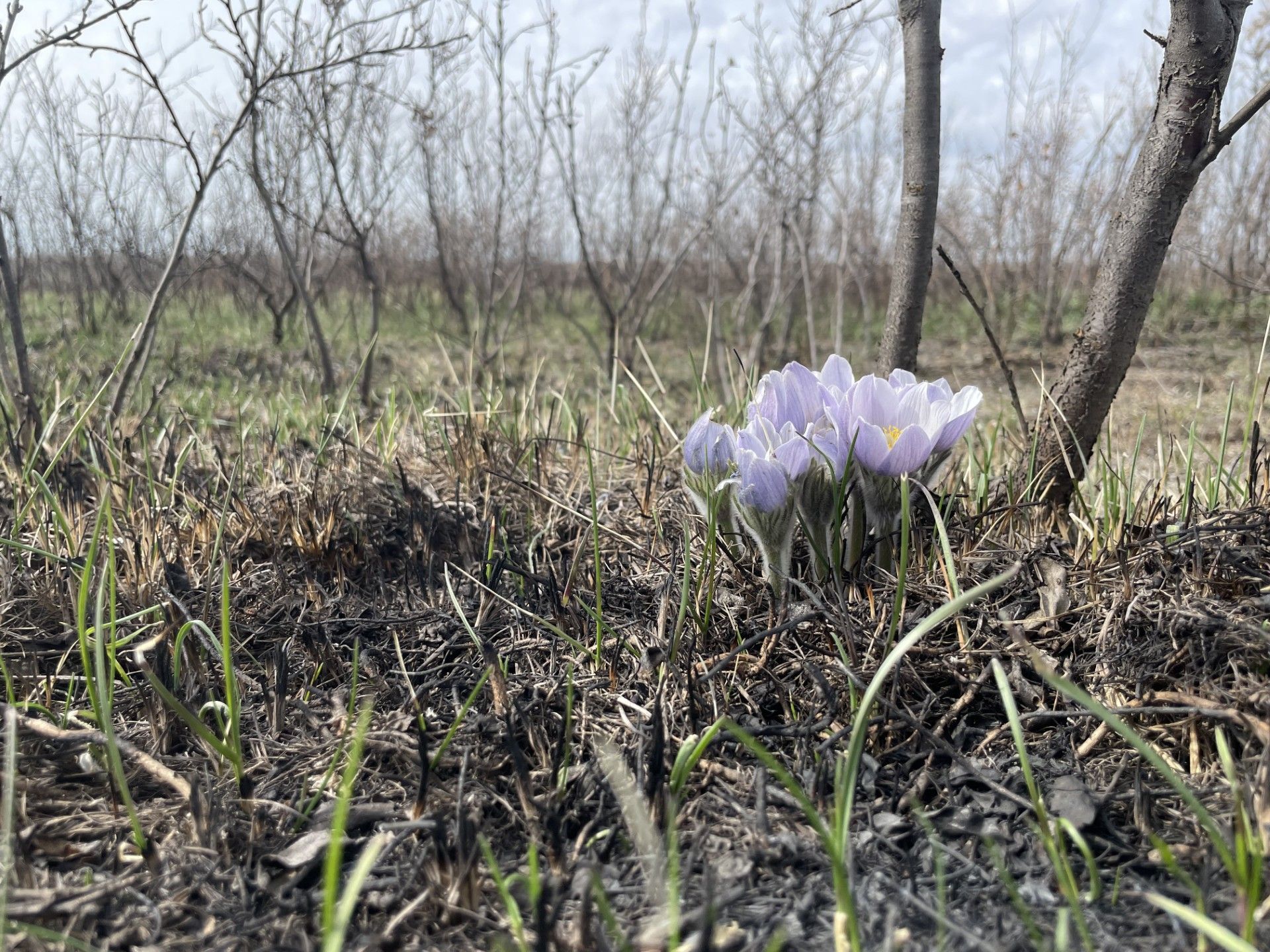
New growth emerging from the ground in spring the year after a prescribed burn.
Today, prescribed fire is being reintroduced across the prairies by a range of land managers, including conservation organizations, government agencies, ranchers, and Indigenous communities. These controlled burns are being used to manage native grasslands, restore degraded habitat, renew forage stands for livestock, and reduce fuel loads in an effort to minimize the severity of future wildfires. Modern prescribed fires are guided by detailed planning and procedures to ensure the safety of the crews and prevent accidental spreading of the fire. Burn plans account for weather conditions, fuel moisture, wind direction, and landscape features that might influence a fire’s size and direction. Trained crews use specialized equipment and work within clearly defined boundaries to minimize risk and achieve their intended ecological outcomes. Perhaps most importantly, there is a growing recognition of the value of Indigenous guidance in using fire for land stewardship. Collaboration between traditional ecological knowledge and western science is helping to restore not only prairie ecosystems, but also cultural relationships with the land as fires rejuvenate plant species that have traditionally been important to First Nations.
As climate variability increases and pressure on prairie ecosystems grows, prescribed fire offers a highly effective solution for building resilience to changing conditions. It supports soil health, enhances biodiversity, and helps maintain the health of the open grassland landscapes that represent the prairies. As more land managers gain experience and training, prescribed fire is once again becoming an essential component of the land stewardship toolkit. Fire has always influenced life on the prairies, and restoring it with respect and consideration will ensure that these ecosystems thrive long after we are gone.
Author
Lydia Sauder
Environmental Technician
Kinnikinnick Consulting