
Festival promotes Indigenous-led, sustainable agriculture
September 29, 2025
Festival promotes Indigenous-led, sustainable agriculture
An event held near Batoche this month aims to reinvigorate Indigenous involvement in agriculture.
Involvement in the agriculture sector is nothing new for Indigenous people — historically that was the livelihood for most.
But the Indigenous Farm and Food Festival, held at the Dumont Lodge last week, is cultivating a deeper connection to Indigenous food systems, agriculture, and to the land itself.
About 120 delegates took part in the event, including workshops that detailed Indigenous food preparation techniques.
One station at the event had participants learning how to crush the seeds of chokecherries so the berries can be made into a preserved dried fruit.
“It’s bringing people together to learn about Indigenous agriculture and food systems, from communities all across Saskatchewan and into the prairies. And we’ve got folks coming in from Ontario and British Columbia,” said Melissa Arcand, organizer and a soil scientist at the University of Saskatchewan.
Get the latest news from Saskatoon, sent directly to you: Download the CTV News App
One participant, Terry Lerat from Cowessess First Nation, runs one of the largest Indigenous farms in the province and stresses the importance of looking after the land, so it continues to produce.
“It’s our own land and if we look after it, if we are farming ourselves, then we look after our own land for us. If someone else is farming your land, you’re not necessarily putting all the inputs into the land,” Lerat said.
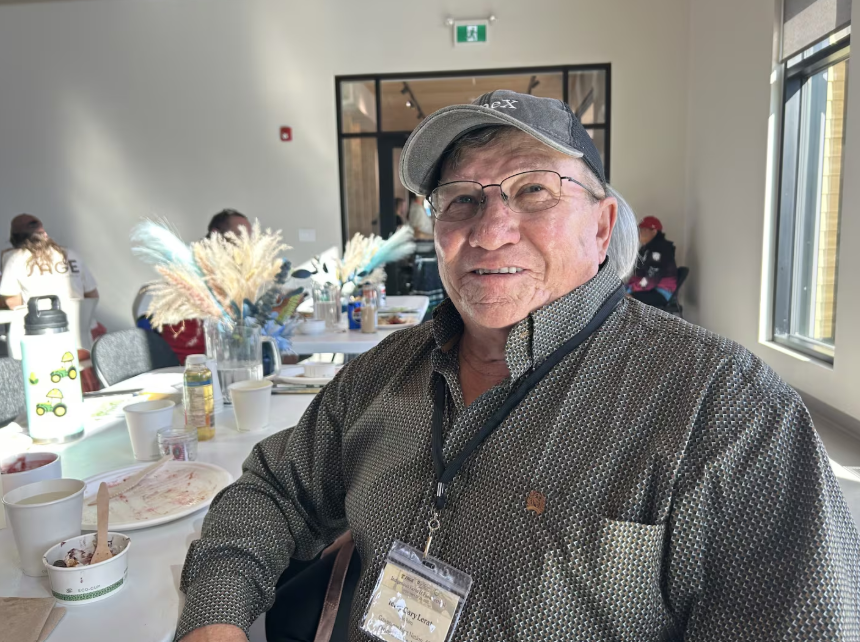
Terry Lerat, from Cowessess First Nation, runs one of the largest Indigenous farms in Saskatchewan. (Carla Shynkaruk / CTV News)
Much of the nearly 1million acres of Indigenous farmland in Saskatchewan is leased out to non-Indigenous farmers, according to those who spoke to CTV News.
Currently there are about 200 Indigenous farmers in the province, Arcand said.
Historically, Arcand says First Nations farmers faced restrictions around where they could sell their product, which made it hard to compete.
“So, there’s a lot of different barriers that have been put into place that has really stifled Indigenous producers from being as successful as they initially were,” she said.
The event, which is partly organized by the SAGE Project, is hoping to change that.
It started last year but has grown from one day to three days.
Other sessions offered included a tractor ride to see the buffalo herd nearby and how to dry corn and preserve it. Corn was a little-known traditional crop in the province for Indigenous people in Saskatchewan.
“Learning about the processes of how to process some Canadian geese and ducks. people can get their hands in and learn about the history of ancestral corn here on the prairies,” Glenda Abbott, one of the experts at the event told CTV News.
As for Lerat who’s been farming his entire life, this event is a step in the right direction for indigenous people and all of agriculture in Saskatchewan.
“We got to utilize our land to improve the lives of our own people, to be sustainable,” he said.
Author
Carla Shynkaruk
Journalist, CTV News Saskatoon